Wellness Coach AI
A hobby project exploring how AI can support behavioral coaching. I am building this to test ethical guardrails in personalized wellness guidance.
Overview
Wellness Coach AI is a behavioral coaching platform that combines large language models with proven techniques from behavioral psychology to help users build sustainable, healthy habits. Unlike one-size-fits-all wellness apps, it adapts to each user's goals, lifestyle, and progress over time.
The problem
Most wellness apps assume users already know what to do — they just need a tracker. In practice, the hardest part of behavior change isn't knowledge; it's the daily friction of figuring out what to do today, staying motivated through setbacks, and adjusting when life gets in the way.
What it does
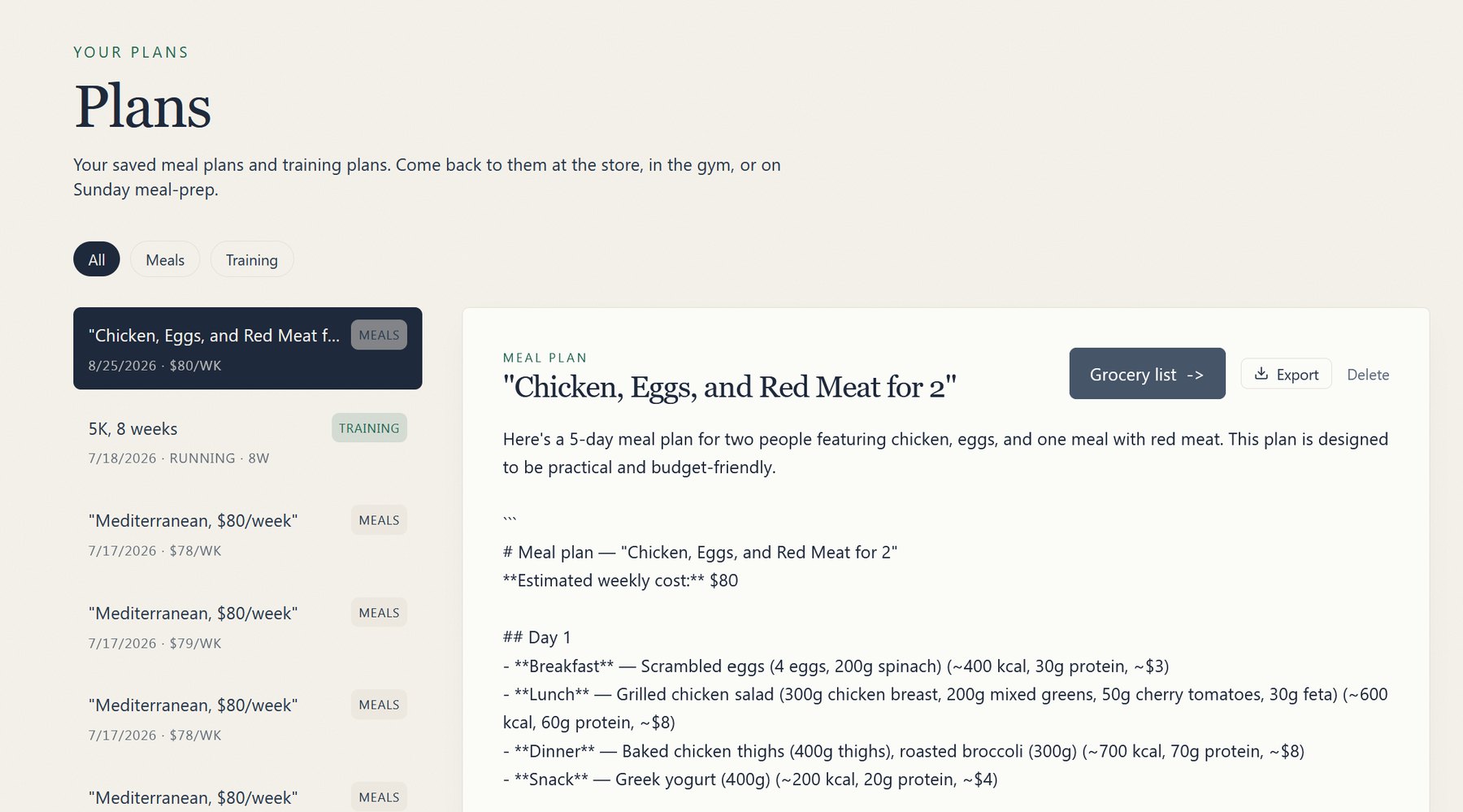
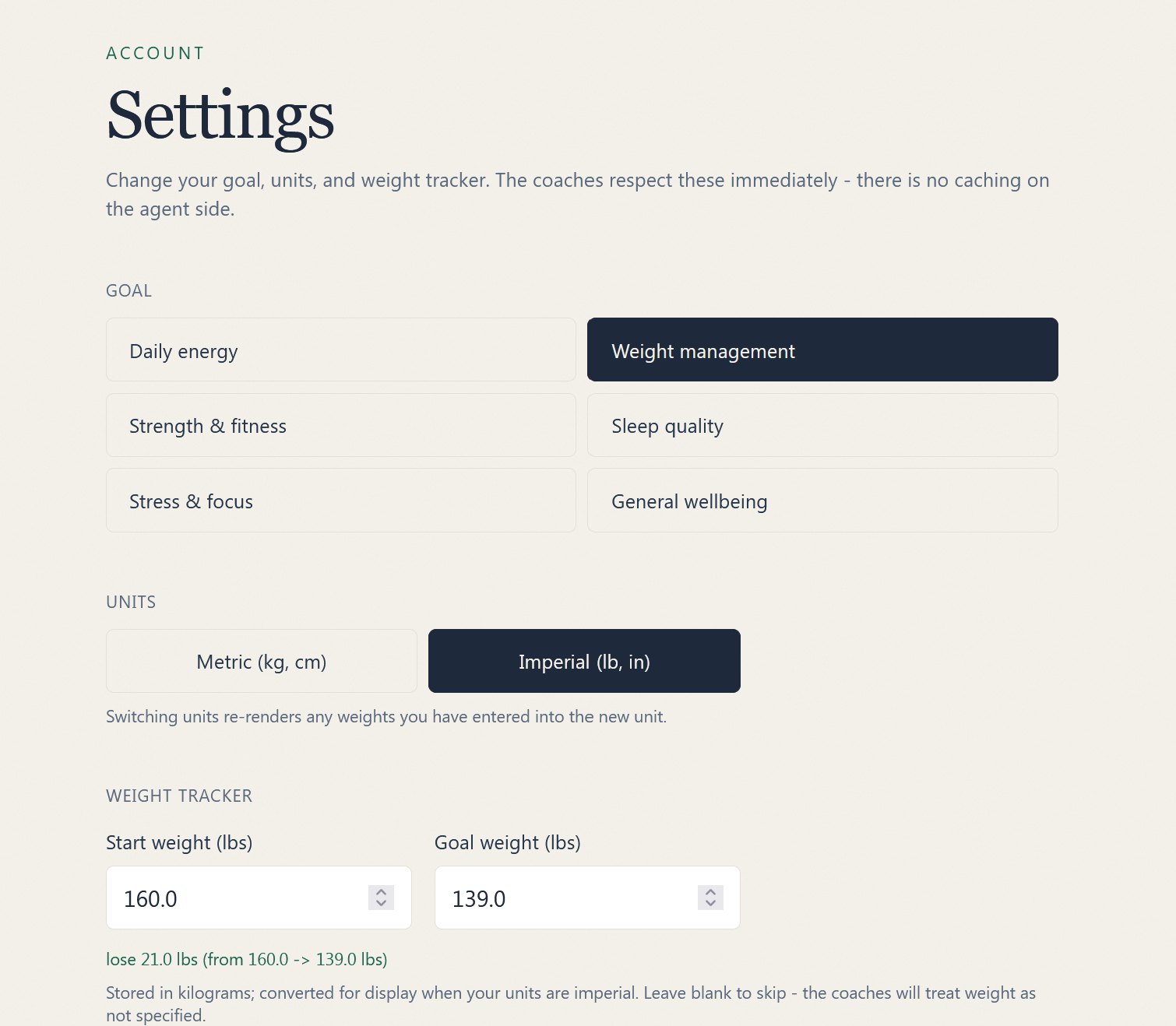
- Personalized wellness plans. Users describe their goals, preferences, and constraints. The coach generates a realistic plan and adjusts it as the user learns what works.
- Meal planning that actually fits. Suggestions account for dietary restrictions, time available, budget, and what's already in the fridge.
- Adaptive exercise recommendations. Workouts scale based on reported energy, prior session performance, and available equipment.
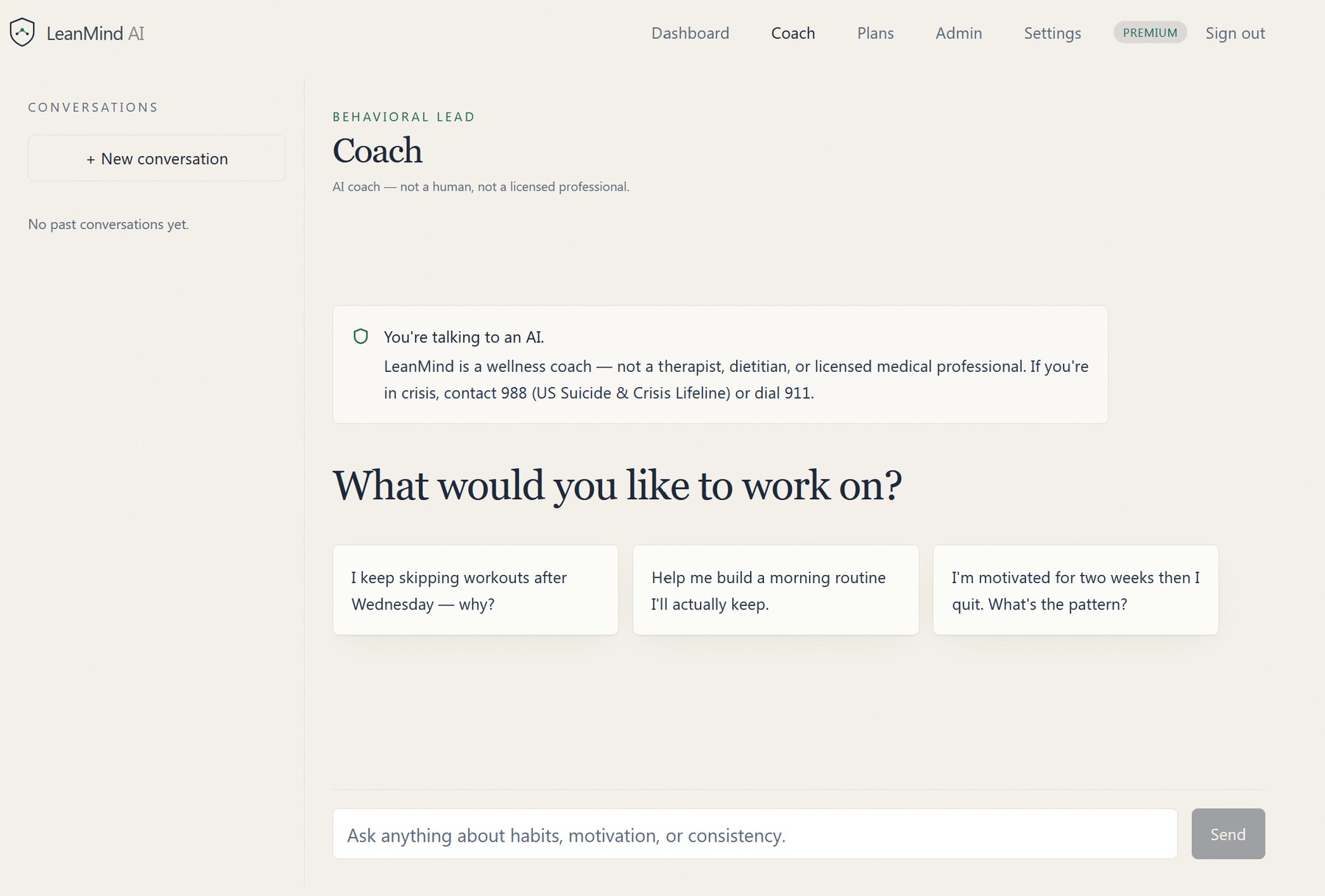
- Motivational, not preachy. The coach pulls from motivational interviewing techniques rather than nagging or shaming.
Architecture
The application is structured around a clear separation between the coaching reasoning layer and the user experience:
- Frontend — Next.js with TypeScript and Tailwind, optimized for fast, friendly interactions.
- Backend — A Python FastAPI service handles plan generation, retrieval, and personalization.
- Memory layer — Embeddings stored in PostgreSQL (pgvector) let the coach recall prior context without sending the entire history to the model.
- Safety layer — Domain-specific guardrails check generated advice before it reaches users — especially around food, exercise, and any health-related content.
Responsible AI considerations
Wellness is a sensitive domain. A few design choices reflect that:
- The system never claims medical authority and recommends professional help where appropriate.
- All outputs are logged and reviewable; users can see why a recommendation was made.
- Personalization data stays scoped to the user and is never used to train shared models.
What's next
Current work is focused on improving the long-term adherence loop — specifically, helping users return to the app after a missed day without feeling judged. Early tests suggest this is the single biggest predictor of meaningful behavior change.
This is a placeholder case study. Replace this text with your real project details, results, and learnings as the project evolves.
Screenshots
Want to know more?
I'm happy to chat about the design choices, technical tradeoffs, or potential applications of this project.